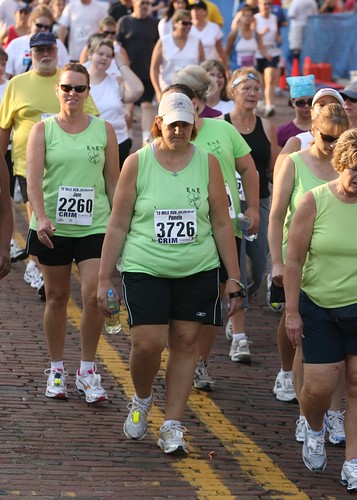
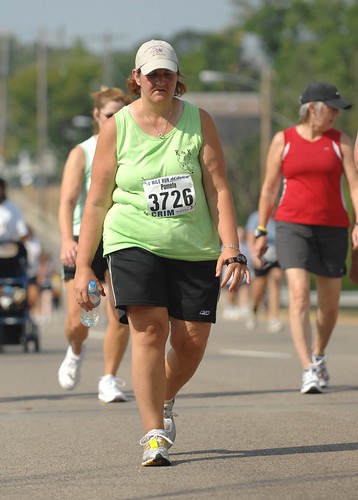
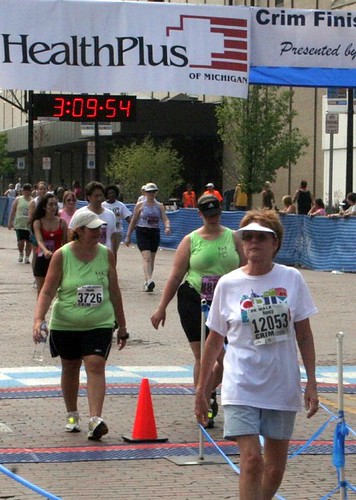
 Photos: copyright by BrightRoom
 Photos: copyright by BrightRoom
In another post you mention that you've worked on your hdl. What did you do to improve that? I've lost 20 pounds, stopped eating red meat and bad-fat foods and my cholesterol #'s have stayed the same! Ug. ~BrianYep, I've raised my GOOD cholesterol and lowered my BAD cholesterol. I actually haven't done anything specific to tweak my cholesterol numbers, per sa, but I think the stuff I've been doing with my diet and exercise is the result of better readings. Here's some background: Total Cholesterol Before surgery: 170 Last week: 129 Lowered by 41 points LDL Cholesterol (the bad stuff) Before surgery: 104 As of May: 61 Lowered by 43 points HDL Cholesterol (the good stuff) -- ideal is over 50 Before surgery: 47 As of April (before Crim): 37 Last week: 50 Notice that before my surgery my good cholesterol wasn't all that far off the target number of 50 or higher. But with the rapid weight loss and lack of exercise early after surgery it dropped down to 37 at my 6-month check up. But with added exercise with Crim training, my good numbers are now up to 50. Still working to get it up even higher though. What'd I do?
For an article from the experts on how to raise your HDL levels, here's one that might help.
So really I'm not doing anything earth shattering to get my readings in good shape. My total cholesterol already wasn't all that bad before my surgery, so I didn't have too far to go. Plus, the basic plan of eating better and exercising more and getting rid of unhealthy habits seems to be what is recommended by the medical community to improve your cholesterol.
There's a great chart here on this website that explains the differences in the types of fats we eat (saturated, trans, monounsaturated, etc.) ... examples of the types of foods that contain those fats and what effect they have on our cholesterol. Very interesting.
I'm not sure that my answer was all that brilliant or magical, Brian. But I hope this points you in the right direction for getting your cholesterol numbers in line.
~Pam

I knew this post would turn into a long rambling-fest. It's interesting to make a list like this and realize how much I have grown to understand myself and what things are important to me now. I could probably add another dozen things to this list and I might update it from time to time. It's good to see it all here in writing though.
~ Pam
 I finished!
Look for a couple more posts about my Crim experience in the next day or two. I can't believe the big day is already here! And before I know it, I'll be starting my next round of training for The Brooksie Way!
~Pam


Today, August 13th, marks the 9-month mark since surgery. Time is flying! It seems only a few weeks ago that I was fighting the insurance company guidelines of that 12 month diet documentation. And it seems like it was only last week when I was coming home from the hospital barely able to sip 2oz of watered down cream soup for dinner. Sitting here realizing that my life has changed so much in the past nine months still boggles my mind.
What has changed for me in the past nine months?
I’m happy. I didn’t even realize that I wasn’t happy nine months ago. But now that I really am … I’m glad I’m at this place in my life that allows me to live the life I’ve always wanted. There are still changes and improvements and goals I want to see in my life, but knowing I’m on the right track makes me glad I’ve worked so hard to get here. Where I am right now is exactly the right place for me at exactly the right time. ~Pam
 If this post confuses you.. just move on. If you're laughing your butt off because of this post, you know it's for you.
Origin of the Letter Q
If this post confuses you.. just move on. If you're laughing your butt off because of this post, you know it's for you.
Origin of the Letter Q
The Roman letter 'Q' started its life as the Phoenician letter 'Qoph', the same Arabic letter 'Qaph', a word meaning the back of the head where it is connected to the neck, and represented by a simplified shape of a head and neck.
Q ("kyoo") is the 17th letter and 13th consonant of the alphabet. Despite its position of honor on the QWERTY keyboard, Q is the one of the three least-used letters in the English language (explaining its value of 10 points in SCRABBLE). In the grammar of English and most Romance languages, the rule is that Q is immediately followed by a U, and is pronounced as /kw/. The letter Q is both historically and phonetically linked to the letter K. It had achieved its present graphical form by the mid-Latin period.


